If you’ve ever worked in industrial automation, power distribution, or control system design, you know that a specialized relay module isn’t just a basic switch—it’s the quiet backbone that keeps critical operations running. As someone who’s spent 12 years in the relay module supply business, fielding calls from electrical engineers and maintenance techs at 7 a.m. and 9 p.m. alike, one question comes up more often than any other: “What’s the actual warranty period for your specialized relay modules?” Specialized Relay Module
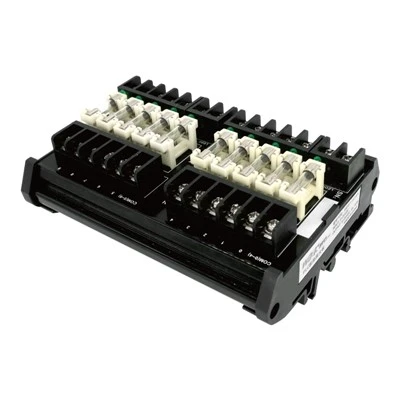
I get it. When you’re investing in a component that controls a conveyor line in a manufacturing plant, a fire alarm system in a hospital wing, or a solar inverter that feeds power back to the grid, you don’t want to guess at how long it’ll hold up. You need a clear, reliable answer—and more importantly, you need to know that the warranty isn’t just a piece of fine print to hide bad products.
Let’s start by busting a common myth. A lot of people assume all relay modules come with a one-size-fits-all 12-month warranty. That’s not true, and it’s especially not true for specialized relay modules. What makes a relay “specialized” anyway? It’s not just a fancy label. These modules are built for specific, often harsh environments: extreme temperatures (from -40°C to 85°C, for example), high vibration, heavy-duty switching loads, or applications where low signal noise is non-negotiable. A relay module designed for a factory floor that runs 24/7 is a very different product than one for a small office control panel, and its warranty should reflect that.
For our company, the warranty period for specialized relay modules is tied directly to two things: the type of module and the application it’s intended for. Let’s break down the most common categories we supply, because that’s where most of the confusion lives.
First, standard specialized modules for general industrial use. These are the workhorses for assembly lines, packaging equipment, and basic control panels. They’re tested for 100,000+ mechanical operations, with high-temperature components that are rated for consistent indoor industrial environments. For these, our warranty period is 24 months from the date of delivery. Wait—you might be thinking, “That’s longer than the basic 12 months I see from big box brands.” Here’s why: we don’t cut corners on testing. Every module leaves our facility after going through a 72-hour burn-in test, where we run it through its full operating cycle, stress the voltage limits, and check for any early failures. We’ve seen way too many brands slap a 12-month warranty on a module that only lasts 18 months in the field, because they skip burn-in to save money. Our 24 months is a promise that our modules will perform as specified for two years, no hidden fine print.
Next, heavy-duty specialized relay modules. These are built for applications that take a real beating: steel mills, mining equipment, marine control systems, and high-current power switching. A module for a mining site might be exposed to dust, moisture, and temperature swings that would destroy a standard relay in months. For these heavy-duty units, we extend the warranty to 36 months. That’s not a random number. Our heavy-duty modules undergo 500,000 mechanical operation tests, and we subject each one to environmental testing that replicates the harshest conditions a customer might face—we’re talking spray tests to mimic marine salt air, vibration tests that match heavy truck and mining equipment movement, and temperature cycling from -50°C to 100°C. When we offer a 3-year warranty on these, it’s because we’ve put them through more stress than they’ll ever see in normal use, and we’re confident they’ll hold up.
Then there are the specialized low-signal or high-frequency modules. These are for applications where precision matters: medical devices, aerospace controls, and telecommunications networks. These modules have to switch tiny, low-voltage signals without causing interference or signal loss. For these, our warranty is also 24 months, but with a specific caveat: it only applies when the module is used in an application that meets the signal load specifications. If a customer uses a low-signal module to switch a heavy load it wasn’t designed for, that’s misuse, and the warranty doesn’t apply. That’s standard for any component, but it’s important to call out because these modules are easy to misapply if you don’t read the specs.
Now, here’s the part most people don’t ask about, but that makes all the difference: what the warranty actually covers, and what it doesn’t. A warranty period is meaningless if it only covers defects in materials, not failures from poor installation or misuse. For our specialized relay modules, the warranty covers any manufacturing defects that cause the module to fail to perform as per its technical specifications, during the warranty period. That means if a module stops working because of a flaw in the wiring, a faulty component we installed, or a design error from our end, we’ll repair or replace it for free, no questions asked. But what’s not covered? Damage from improper installation (like wiring that doesn’t match the module’s voltage rating), overloading the module beyond its rated current, exposure to environmental conditions outside its specified range (like submerging a non-waterproof module in water), or modification of the module by anyone not authorized by our team.
I want to be transparent here, because in this industry, transparency is rare. We’ve had customers try to return a module that’s been burned out because someone wired it to 480V when the module was rated for 240V. That’s not our fault, and we don’t cover that—and we don’t pretend to. But when a customer installs our module correctly, uses it for the intended application, and it fails within the warranty period? We replace it that week, no hoops to jump through. We’ve got a local support team that can help with return authorizations within 24 hours, because we know downtime costs our customers money.
Now, you might be wondering, does the warranty period change if the customer is using the module in a specific custom application? For most custom specialized modules, we work with the customer upfront to define the operating conditions, and we adjust the warranty to match that. For example, if a customer needs a relay module for a remote solar inverter that’s only powered during daylight hours, the operating cycle is much lower than a 24/7 assembly line, so we can offer a slightly extended warranty, sometimes up to 48 months, as long as we test the module to match that lower cycle count. That’s the benefit of working with a supplier that makes specialized modules, not just off-the-shelf ones—we can tailor the warranty to your needs, not just a one-size-fits-all policy.
Let’s also talk about what happens after the warranty period expires. We don’t just disappear once 24 or 36 months are up. We keep parts in stock for 10 years after a module’s production run ends, so if a customer needs a replacement down the line, they don’t have to scramble to find an obsolete part. That’s another part of our service that separates us from bigger brands that phase out parts after 5 years. Because we know that industrial equipment has a longer lifespan than the parts that go into it, we stand behind our products even after the warranty is done.
I’ve seen too many customers get burned by suppliers that offer a “competitive” low warranty period, then refuse to honor claims when their module fails. Last year, a customer came to us after their previous supplier’s 12-month warranty module failed 18 months in, and the supplier said they’d expired. Our 24-month module for the same application ran for 27 months before having a minor issue, which we fixed for free even though it was 3 months past the warranty—because we knew it was a rare manufacturing flaw, and we don’t leave our customers hanging.
So, to sum up: the warranty period for our specialized relay modules ranges from 24 months for general industrial and precision applications, up to 36 months for heavy-duty specialized modules built for harsh environments. For custom modules, we can adjust that to match your specific application needs, with extensions up to 48 months when appropriate. The warranty covers manufacturing defects, is backed by a team that responds quickly, and we stand by our products long after the warranty window closes.
If you’re working on a project where a reliable relay module is critical, and you want to get the full details on the warranty for your specific application, don’t hesitate to reach out. We can walk through your requirements, share the test data that backs our warranty, and make sure you get the right module for your needs without any fine print. The last thing we want is for you to be stuck with a component that fails when you need it most—we’re here to make sure your operations run smoothly, for as long as you need our modules.

If you have questions about our specialized relay modules, their warranty periods, or how to select the right module for your application, feel free to contact our team to discuss your project details and next steps.
Pull Spring Terminal References
International Electrotechnical Commission (IEC) 61810-1: Electromechanical elementary relays for industrial use
National Electrical Manufacturers Association (NEMA) Standards for Industrial Control Devices, Part 1: Relays and Contactors
Manufacturer’s Internal Testing Protocols for Specialized Relay Modules, 2018-2024 Edition
Zhejiang Weide Electric Co., Ltd.
Zhejiang Weide Electric Co., Ltd. is one of the most professional specialized relay module manufacturers and suppliers in China, featured by quality products and low price. If you’re going to buy the newest specialized relay module, welcome to get free sample from our factory. We also accept customized orders.
Address: No. 555, South Binhe 2nd Road, Yueqing City, Zhejiang Province, China
E-mail: zjwdir@wdirele.com
WebSite: https://www.chweide.com/
