If you’ve ever stood next to a running conveyor line at a manufacturing plant, watched a mining rig heave itself up a steep haul road, or seen a wind turbine blade spin steadily in a gentle breeze, you’ve seen a gearbox doing its job. These unassuming components are the muscle behind almost every machine that needs to turn power into motion at the right speed and torque. But when a gearbox fails, the ripple effect is far more than a downtime blip: a mine might lose hours of production worth thousands of dollars, a food processing plant could have to dump a batch of perishable goods, or a wind farm might miss critical wind windows because a turbine can’t adjust its pitch. As a gearbox supplier who’s spent the last 12 years walking customer floors, inspecting failed parts, and troubleshooting installations, I’ve seen more preventable failures than I care to count. Most people assume gearboxes break because they’re “old” or “ran too hard” — but the truth is, failure almost always traces back to one of a handful of avoidable, human-caused or design-related mistakes. Let’s break down the science and the scenarios that kill gearboxes, straight from the shop floor. Gearbox
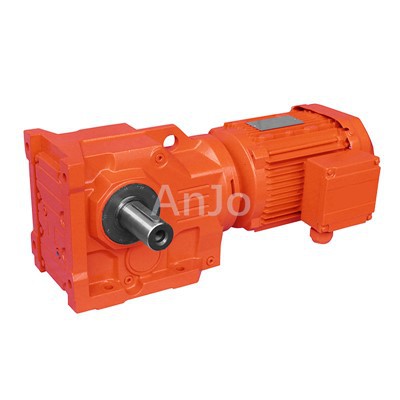
First, let’s start with the basics of how a gearbox works, because understanding its inner function is key to spotting where things go wrong. A typical industrial gearbox has three core parts: a set of intermeshed metal gears (usually steel, hardened to withstand friction), a housing that seals those gears in and keeps contaminants out, and a lubrication system that coats every moving part to reduce heat and wear. When power comes in from a motor, it spins a small input gear that locks with a larger output gear; that changes speed (slowing the rotation to multiply torque, usually) and sends it to whatever tool or machine is connected. Every time those gears mesh, there’s tiny contact pressure — for a heavy-duty gearbox, that can be tens of thousands of pounds per square inch. The lubricant acts as a cushion between those metal surfaces, keeping them from grinding against each other, and also carries away heat generated by friction. If any part of that system breaks down, the gears can’t handle the load, and failure follows.
The most common cause of gearbox failure, I’d argue, is improper or neglected lubrication — and it’s so avoidable, yet so many customers brush it off. I once worked with a steel mill that had three identical gearboxes on their rolling mill line. Two ran smoothly for seven years; the third failed catastrophically in three. When we pulled the failed unit apart, we found the gears were almost completely stripped. The difference? The third gearbox’s oil had never been changed. Let’s get specific here: gear oil doesn’t just “lubricate” — it has additives that break down over time. There are anti-wear additives that create a protective film on gear teeth, extreme pressure additives that handle high contact loads, and corrosion inhibitors to protect the housing and shafts. When oil is left too long, those additives wear out, and the base oil itself can pick up contaminants: metal shavings from gear wear, water from condensation in the housing, or dust that seeps past the seals. For the steel mill’s gearbox, the old oil had lost its anti-wear additives, and metal shavings from gradual gear wear acted like sandpaper between the meshing teeth. Within weeks, the grinding caused enough heat to warp the gear teeth, leading to a complete lockup. That’s not a “random failure” — that’s 100% neglect.
Another lubrication mistake I see all the time is using the wrong oil for the job. A lot of operators default to whatever oil is cheapest, or what they used for a smaller gearbox on a similar machine, without checking the specifications. Heavy industrial gearboxes (like those used in mining haul trucks or large wind turbines) need a gear oil with a higher viscosity — thicker, basically — to maintain that cushion between high-load gear teeth. If you use a thin, low-viscosity oil meant for a light-duty conveyor gearbox in a 100-ton mining drive, the oil will squeeze out from between the gears under pressure, leaving metal-to-metal contact. That causes pitting: small craters form on the gear teeth from repeated stress, and over time those craters grow and merge, until the tooth breaks off entirely. We saw this at a quarry a couple years back; they swapped out their supplier’s recommended gear oil for a cheaper 150-weight oil instead of the 220-weight grade needed for their primary crusher gearbox. Three months later, a gear tooth snapped, costing them a full week of downtime and $180,000 in lost material. That’s the difference between choosing an oil labeled for your gearbox and cutting corners.
Next, alignment issues. When a gearbox is mounted to a motor or to a driven machine, its input and output shafts have to line up perfectly. Even a small misalignment — less than a tenth of a millimeter — might seem trivial, but it creates extra, uneven stress on the gear teeth and the shaft bearings. Think of it like a bike chain that’s slightly off: it rubs against the gears, wears out faster, and can snap if the misalignment is bad enough. I once was on site at a paper mill where a new gearbox had been installed, and within 48 hours it was making a loud whirring noise. When we checked alignment, we found the installers had used a cheap laser alignment tool that was calibrated incorrectly, so the shafts were off by 0.2mm. That misalignment meant one side of every gear tooth was carrying 30% more load than the other. Over just two days, that extra wear caused a crack in the gear tooth, which spread until the gear failed. Proper alignment is non-negotiable, and it’s not just a “set it and forget it” step — as machines vibrate over time, alignment can shift, so regular checks (every six months for heavy-duty units) are critical.
Contamination is another big culprit, and it goes hand in hand with lubrication issues. The gearbox’s housing is supposed to keep out dirt, dust, metal shavings, and water, but worn seals or a damaged housing can let contaminants in. For example, a dust seal that’s cracked from age will let silica dust (common in mines and construction sites) seep into the gearbox. Silica is a super hard material, harder than most gear steel — so it acts like an abrasive, grinding away at gear teeth and bearings from the inside out. Water is even worse, because it breaks down gear oil’s additives and causes rust. We had a wind farm customer whose gearboxes were failing after two years, half the expected service life. When we tested the oil, we found 12% water content. The problem? The gearbox breathers — small valves that let air in and out as the gearbox heats and cools — had not been replaced during routine maintenance. Those breathers get clogged with dust over time, which creates a vacuum inside the housing when the gearbox cools, pulling in moist air that condenses into water. That water mixed with the oil, destroyed the additives, and caused rust pitting on the gear teeth.
Load issues are also a common cause, and they’re often tied to overloading or uneven load distribution. Every gearbox is rated for a specific maximum load — torque and speed — that it can handle safely. If you run a gearbox beyond that rating, even for a short time, you’re asking it to do work it wasn’t designed for. I saw this at a grain elevator where the operators added a second set of conveyors to move more grain, without upgrading their existing gearboxes. The original gearboxes were rated for 100 tons per hour, but they were now moving 150 tons. The extra load put sudden, sharp stress on the gear teeth, causing a condition called bending fatigue: repeated stress leads to cracks in the root of the gear tooth, which eventually breaks. Even if you don’t exceed the maximum load, uneven load can cause failure. For example, if a conveyor belt is off-center, one side of the gearbox’s output shaft has to work harder than the other, leading to uneven wear on the gears.
Another, less talked-about cause is manufacturing or assembly defects. At our gearbox supplier facility, we have strict quality control checks: every gear is precision-cut, every bearing is inspected, every seal is tested before it leaves the factory. But defects can slip through, especially if a customer cuts costs by ordering a lower-grade gearbox from an unvetted supplier. A few years ago, we had a customer who bought a generic gearbox for a wastewater treatment plant pump, and it failed within 6 months. When we examined it, we found the gear teeth were made from low-grade steel that wasn’t hardened properly — the material was soft, so it wore down in a matter of months instead of years. Assembly defects are another issue: if bearings are installed incorrectly, or gears are meshed too tightly (or too loosely), that creates extra stress that leads to premature failure. That’s why it’s critical to source gearboxes from a reputable supplier with a track record of quality, not just the lowest price.
Heat is a silent killer too, and it’s often a secondary issue from other problems, but it can cause failure on its own. Gearboxes generate heat from friction, especially under high load or when lubrication is insufficient. If the gearbox’s cooling system (usually a fan or a housing with cooling fins) isn’t working properly, or if it’s installed in a hot, enclosed space with no ventilation, the internal temperature can rise above the oil’s maximum operating limit. When oil gets too hot, it thins out, loses its additives, and becomes less effective at lubricating. For example, a gearbox running at 180°F might have a service life of 10 years, but if the temperature climbs to 220°F, that service life drops to 2 years. We had a customer who installed a gearbox in a compressor room with no ventilation, and the gearbox ran 40°F hotter than its rated temperature. Even though the oil was changed regularly, the high heat broke down the additives, leading to gear wear and failure.
Now, let’s talk about how these causes often stack up. It’s rarely one single mistake that leads to failure — it’s a combination. A customer might use the wrong oil, neglect to change it, skip alignment checks, and ignore a small leak in the housing — all of which work together to speed up wear. That’s why proactive maintenance is the single best way to prevent gearbox failure, and it’s something we always emphasize to our customers. Routine checks: monitoring oil levels and quality (regular oil analysis can catch additive breakdown or contamination before it causes damage), checking alignment every six months, inspecting seals and breathers for damage, and keeping track of load levels to make sure you’re not overloading the gearbox.

At the end of the day, a gearbox is a precision piece of equipment, but it’s not indestructible. Most failures aren’t random — they’re avoidable, caused by small oversights that add up over time. As a gearbox supplier who’s worked with hundreds of customers across industries, I’ve seen firsthand that investing a little time in proper maintenance, choosing the right components, and working with a trusted supplier pays off far more than cutting corners on price or routine checks. If you’re dealing with a gearbox that’s showing signs of wear, or you’re looking to upgrade to a more reliable unit for your operation, reach out to us to discuss your specific needs. We can help you assess your current setup, recommend the right gearbox for your load and environment, and guide you through maintenance practices to keep your equipment running smoothly for years to come.
BLDC Square Gear Motor References
- Handbook of Gear Design, 4th Edition, Gear Technology Publications, 2021
- Failure Analysis of Industrial Gearboxes, Society for Tribology and Lubrication Engineers (STLE), 2019
- Industrial Gearbox Reliability: Best Practices for Maintenance and Operation, International Organization for Standardization (ISO) 10816-3, 2020
- Lubrication Failure Modes in Speed Reducers, Journal of Mechanical Power Transmission, Vol. 12, No. 2, 2018
- Alignment and Load Effects on Gearbox Service Life, Mining Equipment Maintenance Association (MEMA), 2022
Hangzhou ANG Drive Co., Ltd.
We’re well-known as one of the leading gearbox manufacturers and suppliers in China, also support custom service. Please feel free to wholesale high quality gearbox made in China here from our factory. Contact us for more details.
Address: No.185, Jincheng Rd., Hangzhou 311202, China
E-mail: export6@angdrive.com
WebSite: https://www.angdrive.com/
