Hey everyone, thanks for stopping by. I’m Jake, and I’ve been selling dewatering centrifuges for over 8 years now—most days, I get the same question from prospects, new clients, even folks just Googling “sludge handling”: “Wait, can a dewatering centrifuge actually be used for sludge dewatering?” Like, I get it. If you’re new to wastewater treatment or industrial sludge management, the line between all those big machines can blur real fast. Let me break this down straight, no jargon, no sales spin right off the bat. Dewatering Centrifuge
First, let’s talk what sludge even is. If you work in food and beverage manufacturing, municipal wastewater, or construction, you know sludge is that thick, mucky byproduct you’re stuck with after you’ve filtered out the “good stuff.” It’s a mix of water and solid particles—bacteria, organic matter, grit, whatever your process threw off. The problem with wet sludge? It’s heavy, hard to transport, and if you’re landfilling it, you’re paying per ton. If you’re treating it for reuse (like farm fertilizer, soil amendment, or even incineration for energy), wet sludge is just inefficient. That’s where dewatering comes in—pulling as much water out as you can to make the solids drier, lighter, cheaper to move.
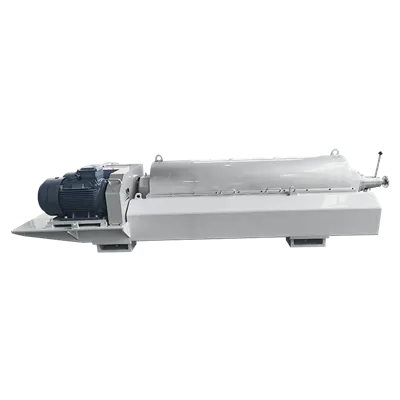
Now, back to the centrifuge question. Short answer: Yes, a dewatering centrifuge is not just for sludge—it’s one of the most widely used pieces of equipment for sludge dewatering, full stop. Wait, why? Let me explain how it works, because that’s the difference between “works in theory” and “actually works for real sludge.” A dewatering centrifuge spins at like 1,500 to 5,000 RPM, generating centrifugal force way stronger than gravity (we’re talking hundreds of Gs, if you care about the number). Sludge gets pumped into a rotating drum inside the centrifuge, and all those heavy solid particles get pushed to the outer edge of the drum while the cleaner water stays closer to the center. The solid sludge is removed as a cake (usually 20-30% solids, sometimes higher if it’s a good feed), and the water gets discharged back into your process or for further treatment.
But hold on—this isn’t just some “one size fits all” thing. I’ve seen guys try to use a lab centrifuge meant for separating milk and cream for industrial sludge, and that’s a disaster. The dewatering centrifuges I sell are specifically built for sludge: they’re large, continuous-feed (so you can run 24/7 if you need), and have adjustable settings for different sludge types. Municipal wastewater sludge, for example, is mostly human waste, food scraps, and grit—so a centrifuge with a bigger drum and higher G-force works best. Industrial sludge from a brewery? Way more organic, lighter solids, so you adjust the speed a little to not fling the tiny particles out. Construction sludge is full of sand and gravel, so you want a centrifuge with a sturdier inner screw to move those heavy solids without wearing out.
I get the confusion, too—there’s belt presses, filter presses, even screw thickers that people use for sludge dewatering. Why would someone pick a centrifuge over those? Let’s do a quick real-world comparison. Belt presses are cheap upfront, but they use a lot of water for cleaning the belt, and they’re way bigger footprint-wise. If you’re in a small plant or a tight industrial space, a dewatering centrifuge is compact. Filter presses get really dry solids, but they’re batch operations—you have to stop, clean the plates, wait for the cake to drop. That’s a pain if you’re running a process that can’t shut down every few hours. Centrifuges run continuously, no downtime for cleaning mid-cycle (just a routine clean every couple weeks). They also handle variable sludge loads way better than other methods—if your incoming sludge gets a little thicker or a little muddier, you can tweak the feed rate or spin speed on the fly, no full equipment overhaul.
Now, let’s talk the “but is it actually effective” part, because I don’t want to lie to anyone. I’ve had clients come to me after a bad experience with another centrifuge brand, saying “your machine actually works while theirs just pumped out wet sludge.” The key here is two things: proper pre-treatment and matching the centrifuge to your sludge. Pre-treatment means adding a flocculant, right? Sludge particles are tiny and sticky, so you need to clump them together into bigger flakes so the centrifuge can separate them. Some people skip the flocculant and wonder why their centrifuge is “broken”—that’s operator error, not the machine. And matching: if you’ve got a sludge that’s 80% water, you can’t use a centrifuge built for thick 90:10 sludge. I’ll work with clients on site tests all the time—we take a sample of their sludge, run it through a demo centrifuge, adjust the settings, and show them exactly what solids percentage they can get before they even buy. No guesswork, no surprise bills.
Wait, but can it handle all sludge? Let’s be honest—no. If your sludge is super, super thin, like 99.5% water, you might need a thickener before it goes to the centrifuge. If it’s got a lot of really fine, lightweight organic particles (like algae from wastewater ponds), you might need a different type of centrifuge—like a disc stack, instead of the decanter centrifuges I mostly sell. But 9 times out of 10, if you’re dealing with municipal sludge, food & beverage sludge, industrial manufacturing sludge, or construction sludge, a dewatering centrifuge is the way to go.
Let me throw in a quick real example to make this real. Last year, a craft brewery in Wisconsin came to me. They were paying $1,200 a month to haul 10,000 gallons of wet sludge to a landfill. That’s like 80,000 pounds of wet muck. They got a dewatering centrifuge, spent $500 a month on flocculant and electricity, and now they only haul 2,000 gallons of dried cake a month—so around 16,000 pounds, and their hauling cost dropped to $300 a month. They paid off the centrifuge in 7 months, and now they even give the dried cake to local farms as soil amendment. That’s the kind of win I love seeing.
Another one: a municipal wastewater plant in Texas. They were using a belt press that was always breaking down, and their cake was only 15% solids. The centrifuge we installed got them 27% solids, so they could incinerate the cake and generate 10% of the plant’s power needs. That’s not just cost savings, that’s sustainability, which is huge right now.
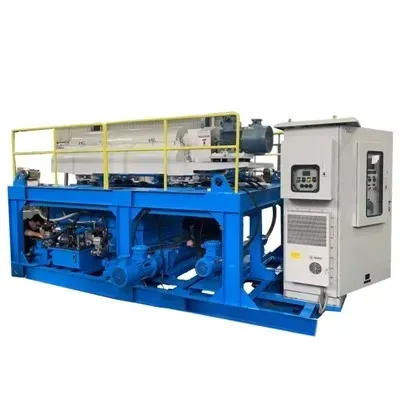
Now, let’s address the common myths I hear all the time. Myth #1: Centrifuges use too much energy. Yeah, they use more energy than a belt press, but when you factor in the lower hauling costs, less maintenance, and less waste, it evens out fast. Myth #2: Centrifuges are too expensive to maintain. If you buy a quality machine (not the cheap no-name off Amazon I see some guys try), maintenance is just checking the bearings every 6 months, and changing the screw wear parts every 2-3 years. That’s way cheaper than replacing a filter press’s plates every year. Myth #3: They’re hard to operate. Modern dewatering centrifuges have touchscreen controls, auto-adjust settings based on feed, and most of our clients can have a new operator up and running in a day. No fancy engineering degree needed.
I know, I know—you’re probably thinking, “Okay, it works, but how do I know if it’s right for me?” That’s where I come in. I don’t just sell machines. I’ll send a rep to your site to take a sludge sample, run tests, look at your space, your flow rate, and your budget. I’ll give you a straight-up quote, no hidden fees, and even show you case studies of other businesses like yours that switched to our centrifuges and saved money. I don’t push a centrifuge if it’s not the best fit—if a filter press would work better for you, I’ll tell you that too, even if it means I don’t make a sale. Because trust me, if I send you the wrong machine, you’ll come back mad, and we’ll lose a client. I’d rather have a happy client for life than one quick sale.
At the end of the day, sludge management is a headache for almost every industry. If you’re tired of paying through the nose for hauling, dealing with messy, inconsistent waste, or trying to hit sustainability goals for your business, a dewatering centrifuge is absolutely a solution worth considering. But don’t take my word for it—ask someone who’s used one, or run a test with a sample of your sludge.
If you’re curious, want to chat through your specific sludge issue, or just want a free site assessment to see if a centrifuge makes sense for you, reach out. No pressure, no sales pitch over the phone. Just me, answering your questions, helping you figure out what will work for your business. Don’t let the confusion between dewatering equipment stop you from saving money and making your sludge problem way easier to handle.
Decanter Centrifuge References
- Wastewater Engineering: Treatment and Reuse, Metcalf & Eddy, Inc. (2003)
- Sludge Dewatering Technologies: A Review, Journal of Environmental Management (2018)
- Industrial Centrifuge Applications for Sludge Processing, American Society of Mechanical Engineers (2020)
Lishui Yuanrong Environmental Protection Equipment Co., Ltd.
As one of the most professional dewatering centrifuge manufacturers and suppliers in China, we have world-leading production equipment and strong manufacturing capabilities. Please feel free to buy customized dewatering centrifuge from our factory. Also, quotation is available.
Address: Lot 6-1, Block 15, Wanyang Zongchuang City, Lishui, Zhejiang, China
E-mail: 361184920@qq.com
WebSite: https://www.yrhdc.com/
