Hey there! I’m a supplier of Resin Abrasive Media, and today I wanna chat about the friction coefficient of Resin Abrasive Media. Resin Abrasive Media

First off, let’s get a basic understanding of what the friction coefficient is. In simple terms, the friction coefficient is a value that shows how much friction there is between two surfaces when they’re in contact. It’s a number that helps us figure out how easily one surface can slide over another.
For Resin Abrasive Media, the friction coefficient is super important. It plays a huge role in how well the abrasive media works. You see, when we use Resin Abrasive Media for things like sanding, polishing, or grinding, the friction between the media and the surface being worked on is what does the job.
The friction coefficient of Resin Abrasive Media can vary depending on a few factors. One of the main factors is the type of resin used. Different resins have different properties, and these properties can affect the friction coefficient. For example, some resins are softer, and they might have a lower friction coefficient. Softer resins can be good for more delicate surfaces where you don’t want to cause too much damage. On the other hand, harder resins usually have a higher friction coefficient. They’re great for tougher jobs where you need to remove a lot of material quickly.
Another factor that affects the friction coefficient is the shape and size of the abrasive particles in the Resin Abrasive Media. If the particles are larger and have a more irregular shape, they’re likely to have a higher friction coefficient. This is because they can grip the surface better and create more friction. Smaller, more rounded particles might have a lower friction coefficient, but they can also provide a smoother finish.
The surface finish of the Resin Abrasive Media itself also matters. A rougher surface finish will generally have a higher friction coefficient. This can be useful when you need to remove a lot of material, like when you’re sanding down a rough piece of wood or metal. A smoother surface finish, on the other hand, can be better for finishing touches and getting a nice, polished look.
Now, let’s talk about why knowing the friction coefficient of Resin Abrasive Media is so important for us suppliers and our customers. For us suppliers, understanding the friction coefficient helps us develop better products. We can adjust the resin, the abrasive particles, and the surface finish to create media with the right friction coefficient for different applications.
For our customers, knowing the friction coefficient is crucial for choosing the right Resin Abrasive Media for their specific needs. If they’re working on a project that requires a lot of material removal, they’ll want a media with a high friction coefficient. But if they’re looking for a smooth finish, a media with a lower friction coefficient might be a better choice.
Let’s take an example. Say you’re a woodworker. You’re making a beautiful piece of furniture, and you need to sand the wood to get a smooth surface. You wouldn’t want to use a Resin Abrasive Media with a really high friction coefficient right off the bat. That could scratch the wood and make it look bad. Instead, you might start with a media with a lower friction coefficient to do the initial sanding and then switch to a higher friction coefficient media if you need to remove more material.
On the other hand, if you’re a metalworker and you’re trying to remove a thick layer of rust from a metal surface, you’ll probably want a Resin Abrasive Media with a high friction coefficient. This will allow you to remove the rust quickly and efficiently.
Measuring the friction coefficient of Resin Abrasive Media isn’t always easy. There are different methods and tools that can be used. One common method is to use a tribometer. A tribometer measures the friction between two surfaces as they slide against each other. It can give us a numerical value for the friction coefficient.
But even with these measurement tools, it can still be a bit tricky. The friction coefficient can change depending on things like the temperature, the humidity, and the pressure applied. So, we need to make sure we’re measuring the friction coefficient under the right conditions to get accurate results.
As a supplier of Resin Abrasive Media, I’m always looking for ways to improve our products. We’re constantly researching and testing different resins, abrasive particles, and surface finishes to find the best combination for different applications. We want to make sure that our customers are getting the most effective and efficient Resin Abrasive Media possible.
If you’re in the market for Resin Abrasive Media, I encourage you to think about the friction coefficient. Consider the type of project you’re working on and what kind of friction you need. If you have any questions or need help choosing the right media, don’t hesitate to reach out. We’re here to help you find the perfect solution for your needs.
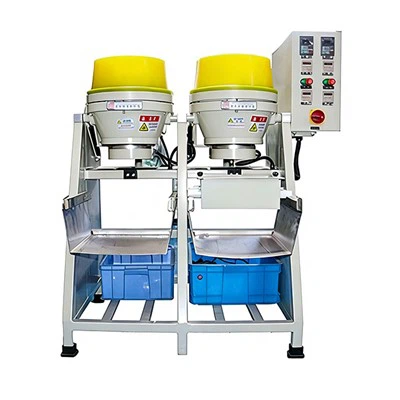
In conclusion, the friction coefficient of Resin Abrasive Media is a key factor in its performance. By understanding how it works and how it can be adjusted, we can create better products and help our customers achieve the best results. So, if you’re looking for high – quality Resin Abrasive Media, give us a shout. We’d love to have a chat and see how we can work together.
Magnetic Polishing Machine References:
- Tribology textbooks on friction and surface interactions
- Industry research papers on abrasive media performance
Dongguan Xindingsheng Intelligent Grinding Technology Co., Ltd.
Dongguan Xindingsheng Intelligent Grinding Technology Co., Ltd. is one of the most reliable resin abrasive media manufacturers and suppliers in China, also supports customized service. Please feel free to wholesale bulk high quality resin abrasive media in stock here from our factory. Contact us for pricelist.
Address: Room 101, Building 1, No. 73 Dahuangmei Road, Dalingshan Town, Dongguan City, Guangdong Province, China
E-mail: cndskj@126.com
WebSite: https://www.xdsfinishing.com/
