When it comes to selecting the right size of an indoor winch, there are multiple factors to take into account. As a supplier of both indoor and outdoor winches, I’ve encountered various customers with different needs and requirements. In this blog, I’ll share some insights on how to choose the appropriate size of an indoor winch based on practical experience and industry knowledge. Indoor and Outdoor Winches
Understanding the Basics of Winch Capacity
The most crucial aspect in choosing an indoor winch is its capacity. Winch capacity is typically measured in pounds or kilograms, indicating the maximum weight the winch can safely pull. To determine the right capacity, you need to consider the weight of the load you’ll be moving. For instance, if you’re using the winch to lift small equipment or tools in a workshop, a winch with a lower capacity, say 500 – 1000 pounds, might be sufficient. However, if you’re dealing with heavier loads such as large machinery or heavy crates, you’ll need a winch with a much higher capacity, perhaps 2000 pounds or more.
It’s important to note that you should never exceed the rated capacity of a winch. Overloading a winch can not only damage the winch itself but also pose a significant safety risk. Always add a safety margin to the estimated weight of the load. A general rule of thumb is to choose a winch with a capacity that is at least 1.5 to 2 times the weight of the heaviest load you plan to lift. This ensures that the winch can handle the load safely, even under unexpected circumstances.
Consider the Lift Height and Pulling Distance
Another factor to consider is the lift height and pulling distance. If you need to lift the load to a significant height or pull it over a long distance, you’ll need a winch with a sufficient amount of cable. The cable length of a winch is an important specification. A longer cable allows you to reach greater heights or distances. However, keep in mind that as the cable length increases, the winch’s pulling capacity may decrease slightly.
For example, if you’re using the winch in a multi – story building to lift materials from the ground floor to an upper floor, you’ll need a winch with a long cable. Measure the vertical distance from the starting point to the destination and choose a winch with a cable length that can accommodate this distance. Additionally, consider the pulling speed. Some winches offer variable speed options, which can be useful when you need to control the lifting or pulling process precisely.
Evaluate the Space Constraints
Indoor spaces often have limited room for equipment. When choosing an indoor winch, you need to consider the physical dimensions of the winch itself. A large and bulky winch may not fit in a small workshop or storage area. Look for a winch that is compact and can be easily installed in the available space.
Also, consider the mounting options. Some winches can be wall – mounted, while others are designed for floor – mounting. Wall – mounted winches are a great option if you have limited floor space. They can be installed at a convenient height, allowing for easy operation. Floor – mounted winches, on the other hand, provide more stability but may require more floor area.
Power Source and Control Options
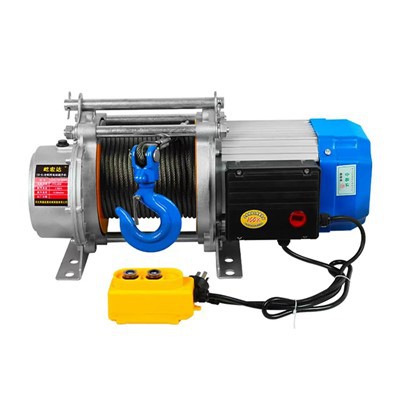
Indoor winches can be powered by different sources, such as electricity, hydraulics, or manual operation. Electric winches are the most common choice for indoor use because they are easy to operate and can be plugged into a standard electrical outlet. They also offer consistent power and are relatively quiet.
Hydraulic winches, on the other hand, are more powerful and are often used for heavy – duty applications. However, they require a hydraulic power unit, which can be more expensive and take up more space. Manual winches are a simple and cost – effective option for light – duty tasks. They are operated by hand, which can be useful in situations where electricity is not available or when you need precise control.
In terms of control options, some winches come with remote controls, which allow you to operate the winch from a distance. This can be very convenient, especially when you need to stand at a safe distance while lifting or pulling a load. Other winches have manual controls, which require you to be close to the winch to operate it.
Duty Cycle
The duty cycle of a winch refers to the amount of time the winch can operate continuously without overheating. This is an important factor, especially if you plan to use the winch for extended periods. A winch with a high duty cycle can operate for longer periods without shutting down due to overheating.
For example, if you’re using the winch in a manufacturing process where you need to lift and move materials continuously throughout the day, you’ll need a winch with a high duty cycle. On the other hand, if you only use the winch occasionally for short – term tasks, a winch with a lower duty cycle may be sufficient.
Safety Features
Safety should always be a top priority when choosing an indoor winch. Look for winches that come with safety features such as overload protection, brake systems, and emergency stop buttons. Overload protection prevents the winch from being overloaded, which can damage the winch and cause accidents. A reliable brake system ensures that the load stays in place once it has been lifted or pulled. Emergency stop buttons allow you to quickly stop the winch in case of an emergency.
Compatibility with Accessories
Consider the compatibility of the winch with various accessories. Some winches can be used with hooks, slings, and other lifting attachments. Make sure that the winch you choose can be easily paired with the accessories you need for your specific application. This allows you to customize the winch to meet your unique requirements.
Cost and Budget
Finally, cost is an important factor to consider. Winches come in a wide range of prices, depending on their capacity, features, and brand. Set a budget before you start shopping for a winch and look for a winch that offers the best value for your money. Remember that a higher – quality winch may cost more upfront but can save you money in the long run by reducing maintenance and replacement costs.

In conclusion, choosing the right size of an indoor winch requires careful consideration of multiple factors, including capacity, lift height, space constraints, power source, duty cycle, safety features, compatibility with accessories, and cost. By taking the time to evaluate these factors, you can select a winch that meets your specific needs and provides reliable performance.
Lifting Auxiliary Frame If you’re in the market for an indoor winch and need further assistance, feel free to reach out to us. Our team of experts is ready to help you find the perfect winch for your application. We offer a wide range of indoor and outdoor winches, and we can provide personalized advice based on your requirements. Contact us today to start the procurement process and take the first step towards getting the right winch for your needs.
References
- "Winch Handbook" – A comprehensive guide on winch selection and operation.
- Industry standards and guidelines for winch safety and performance.
- Manufacturer’s specifications and product manuals for various winches.
Hebei Hengtai Crane Machinery Manufacturing Co., Ltd.
As one of the leading indoor and outdoor winches manufacturers in China, we warmly welcome you to buy bulk discount indoor and outdoor winches in stock here from our factory. All customized products are with high quality and low price. For more cheap products, contact us now.
Address: Weigezhuang Village, Donglu Township, Qingyuan District, Baoding City, Hebei Province
E-mail: hbht@cnhengtai.com
WebSite: https://www.cnhengtai.com/
