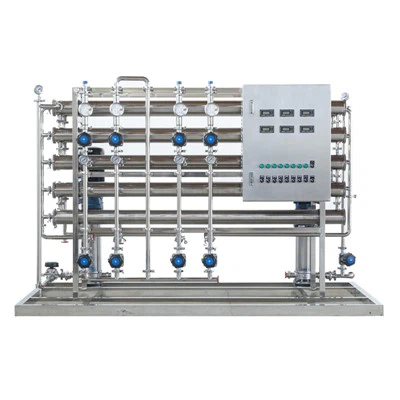
As a seasoned supplier of SWRO (Seawater Reverse Osmosis) and BWRO (Brackish Water Reverse Osmosis) equipment, I’ve witnessed firsthand the diverse challenges and opportunities presented by different water qualities. In this blog, I’ll delve into how BWRO equipment performs in various water conditions, sharing insights based on years of industry experience and real-world applications. SWRO & BWRO Equipment
Understanding BWRO Technology
Before we explore the performance of BWRO equipment in different water qualities, it’s essential to understand the underlying technology. BWRO systems utilize reverse osmosis membranes to remove dissolved salts, minerals, and other contaminants from brackish water. The process involves applying pressure to force water through the semi-permeable membrane, leaving behind impurities and producing clean, potable water.
Performance in Low Salinity Brackish Water
Low salinity brackish water typically contains less than 10,000 ppm (parts per million) of total dissolved solids (TDS). In such conditions, BWRO equipment can achieve high water recovery rates, often exceeding 70%. The lower salt concentration reduces the osmotic pressure, allowing the system to operate at lower pressures and consume less energy.
One of the key advantages of BWRO equipment in low salinity water is its ability to produce high-quality water with low levels of contaminants. The reverse osmosis membranes can effectively remove a wide range of impurities, including salts, heavy metals, and microorganisms, ensuring that the treated water meets or exceeds drinking water standards.
However, even in low salinity water, there are still challenges to overcome. For example, the presence of certain contaminants, such as iron, manganese, and silica, can cause fouling of the membranes, reducing their performance and lifespan. To mitigate these issues, pre-treatment processes, such as filtration and chemical dosing, are often required to remove or reduce the concentration of these contaminants before they reach the membranes.
Performance in High Salinity Brackish Water
High salinity brackish water contains between 10,000 and 35,000 ppm of TDS. In these conditions, the osmotic pressure is higher, requiring the BWRO system to operate at higher pressures to achieve the desired water recovery rate. As a result, the energy consumption of the system increases, and the water recovery rate may be lower, typically in the range of 50-70%.
Despite the challenges, BWRO equipment can still effectively treat high salinity brackish water. Advanced membrane technologies and system design can help to optimize the performance of the system, reducing energy consumption and improving water quality. For example, the use of high-pressure pumps and energy recovery devices can help to reduce the energy requirements of the system, while the use of anti-scalant chemicals can prevent the formation of scale on the membranes, improving their performance and lifespan.
In addition to the technical challenges, the treatment of high salinity brackish water also requires careful consideration of the environmental impact. The disposal of the concentrated brine produced by the BWRO system can have a significant impact on the environment, particularly in areas with sensitive ecosystems. To minimize the environmental impact, it’s important to implement appropriate brine management strategies, such as dilution, evaporation, or reuse.
Performance in Water with High Organic Matter Content
Brackish water can also contain high levels of organic matter, such as humic acids, tannins, and algae. These organic compounds can cause fouling of the membranes, reducing their performance and lifespan. In addition, the presence of organic matter can also lead to the formation of disinfection by-products (DBPs) during the treatment process, which can have negative health effects.
To address these challenges, pre-treatment processes, such as coagulation, flocculation, and filtration, are often required to remove or reduce the concentration of organic matter before it reaches the membranes. In addition, the use of advanced oxidation processes, such as ultraviolet (UV) light or ozone, can help to break down the organic compounds and reduce their fouling potential.
Another approach to dealing with high organic matter content is the use of membrane bioreactors (MBRs). MBRs combine the benefits of biological treatment and membrane filtration, allowing for the effective removal of organic matter and other contaminants from the water. The use of MBRs can also help to reduce the energy consumption of the BWRO system, as the biological treatment process can reduce the load on the membranes.
Performance in Water with High Hardness
Hard water contains high levels of calcium and magnesium ions, which can cause scaling on the membranes and other components of the BWRO system. Scaling can reduce the performance of the system, increase energy consumption, and shorten the lifespan of the membranes.
To prevent scaling, pre-treatment processes, such as ion exchange or chemical softening, are often required to remove or reduce the concentration of calcium and magnesium ions before they reach the membranes. In addition, the use of anti-scalant chemicals can help to prevent the formation of scale on the membranes, improving their performance and lifespan.
Another approach to dealing with high hardness is the use of nanofiltration (NF) membranes. NF membranes have a larger pore size than reverse osmosis membranes, allowing them to remove a significant portion of the calcium and magnesium ions while still allowing some of the beneficial minerals to pass through. The use of NF membranes can help to reduce the energy consumption of the BWRO system, as the lower pressure requirements of the NF process can result in lower energy costs.
Conclusion
In conclusion, the performance of BWRO equipment in different water qualities depends on a variety of factors, including the salinity, organic matter content, hardness, and other contaminants present in the water. By understanding these factors and implementing appropriate pre-treatment and system design strategies, it’s possible to optimize the performance of the BWRO system and ensure the production of high-quality water.
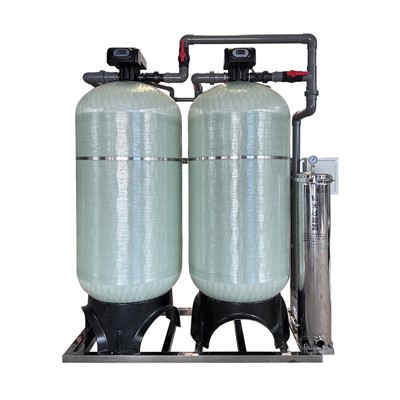
As a supplier of SWRO and BWRO equipment, we have the expertise and experience to help you select the right equipment for your specific water quality and application. Our team of engineers and technicians can provide customized solutions that meet your unique needs and requirements, ensuring the reliable and efficient operation of your BWRO system.
RO Purified Water Equipment If you’re interested in learning more about our SWRO and BWRO equipment or would like to discuss your specific water treatment needs, please don’t hesitate to contact us. We look forward to working with you to provide the best possible water treatment solutions.
References
- AWWA (American Water Works Association). Water Quality and Treatment: A Handbook of Community Water Supplies. McGraw-Hill, 2017.
- Crittenden, J. C., et al. Water Treatment: Principles and Design. John Wiley & Sons, 2012.
- National Research Council. Desalination: A National Perspective. National Academies Press, 2008.
Shandong Yanuo Environmental Protection Equipment Co., Ltd.
We’re well-known as one of the leading swro & bwro equipment manufacturers and suppliers in China, featured by quality products and good price. Please rest assured to buy bulk swro & bwro equipment made in China here from our factory. Customized orders are welcome.
Address: North Side of the Road, 1,000 Meters West of the Intersection of Fenghuangshan West Road and Provincial Highway S102, Wangfu Subdistrict, Qingzhou City, Weifang City, Shandong Province.
E-mail: ynhb.499973983@gmail.com
WebSite: https://www.zkyaruo.com/
