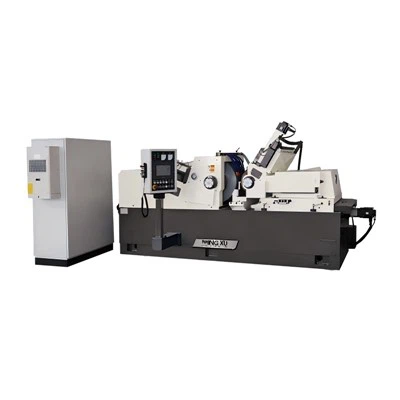
When it comes to centerless grinding, one of the key decisions that manufacturers and machinists need to make is whether to use wet or dry centerless grinding. As a supplier of centerless grinding machines, I’ve had the privilege of working with a wide range of clients across various industries. Through these experiences, I’ve gained valuable insights into the differences between wet and dry centerless grinding, each with its own set of advantages and disadvantages. In this blog post, I’ll delve into these differences to help you make an informed decision for your specific grinding needs. Centerless Grinding Machine
1. Cooling and Lubrication
Wet Centerless Grinding
In wet centerless grinding, a coolant is continuously applied to the grinding zone. This coolant serves multiple crucial functions. Firstly, it acts as a cooling agent. During the grinding process, a significant amount of heat is generated due to the friction between the grinding wheel and the workpiece. If this heat is not dissipated effectively, it can lead to several problems. For example, the workpiece may experience thermal expansion, which can result in dimensional inaccuracies. Excessive heat can also cause the surface of the workpiece to harden unevenly, leading to micro – cracks and reduced material integrity.
The coolant in wet grinding absorbs this heat and carries it away from the grinding zone, maintaining a stable temperature. Additionally, the coolant provides lubrication, reducing the friction between the grinding wheel and the workpiece. This helps to prolong the life of the grinding wheel, as less wear occurs on the abrasive grains. With proper lubrication, the grinding process becomes smoother, and the surface finish of the workpiece is generally improved, with fewer scratches and a more consistent texture.
Dry Centerless Grinding
In contrast, dry centerless grinding operates without the use of a coolant. Since there is no coolant to dissipate heat, the heat generated during grinding remains in the grinding zone. This can significantly increase the temperature of the workpiece and the grinding wheel. However, in some cases, this heat can be managed through proper machine design and process optimization. For instance, using a grinding wheel with a suitable abrasive and porosity can help to reduce heat generation.
The absence of coolant also means that there is no lubrication in the traditional sense. As a result, the grinding wheel may wear out more quickly, and the surface finish of the workpiece may not be as smooth as in wet grinding. However, dry grinding can be beneficial for applications where the presence of coolant is not desirable, such as in the production of parts that cannot be contaminated by coolant residues.
2. Chip Removal
Wet Centerless Grinding
The use of coolant in wet centerless grinding plays a vital role in chip removal. As the grinding wheel cuts into the workpiece, small chips are produced. These chips need to be removed from the grinding zone to prevent them from getting trapped between the grinding wheel and the workpiece, which can cause surface damage and reduce the accuracy of the grinding process.
The flowing coolant acts as a carrier for the chips, flushing them away from the grinding area. This ensures that the grinding wheel remains clean and can continue to cut effectively. The chips are usually carried away by the coolant to a collection system, where they can be separated from the coolant for proper disposal or recycling.
Dry Centerless Grinding
In dry centerless grinding, chip removal is more challenging. Without the coolant to flush the chips away, the chips tend to accumulate around the grinding zone. This accumulation can lead to clogging of the grinding wheel, which in turn reduces its cutting ability and increases the heat generated during grinding.
To address this issue, specialized chip removal systems may be required. For example, some dry grinding machines are equipped with air – blast systems that blow the chips away from the grinding area. However, these systems may not be as effective as the coolant – based chip removal in wet grinding.
3. Surface Finish and Dimensional Accuracy
Wet Centerless Grinding
As mentioned earlier, the cooling and lubrication provided by the coolant in wet centerless grinding result in a better surface finish. The reduced friction and consistent temperature help to produce a smoother, more uniform surface on the workpiece. This is particularly important for applications where a high – quality surface finish is required, such as in the production of precision components for the automotive, aerospace, and medical industries.
In terms of dimensional accuracy, the stable temperature maintained by the coolant helps to minimize thermal expansion and contraction of the workpiece. This allows for more precise control of the grinding process, resulting in parts that meet tight dimensional tolerances.
Dry Centerless Grinding
While dry centerless grinding can achieve a satisfactory surface finish and dimensional accuracy in some applications, it generally faces more challenges. The higher heat generation can cause thermal distortion of the workpiece, leading to dimensional inaccuracies. Additionally, the lack of lubrication and the potential for chip clogging can result in a rougher surface finish compared to wet grinding. However, with advanced grinding wheels, proper machine settings, and skilled operators, dry grinding can still be used to produce parts with acceptable quality.
4. Environmental and Safety Considerations
Wet Centerless Grinding
The use of coolant in wet centerless grinding raises several environmental and safety concerns. The coolant itself may contain chemicals that can be harmful to the environment if not properly managed. For example, some coolants contain heavy metals or other pollutants that can contaminate water sources if they are discharged without treatment.
In addition, the coolant can create a slippery work environment, increasing the risk of slips and falls. Workers also need to take precautions to avoid contact with the coolant, as it may cause skin irritation or other health problems. Proper ventilation and personal protective equipment (PPE) are necessary to ensure the safety of the workers.
Dry Centerless Grinding
Dry centerless grinding is generally more environmentally friendly as it does not use coolant. This eliminates the need for coolant disposal and reduces the risk of environmental pollution. From a safety perspective, there is no risk of slipping on coolant, and the potential health hazards associated with coolant exposure are eliminated. However, dry grinding produces dust, which can be a respiratory hazard if inhaled. Therefore, proper dust collection systems and PPE, such as dust masks, are required to protect the workers.
5. Cost Considerations
Wet Centerless Grinding
Wet centerless grinding involves additional costs associated with the coolant. These costs include the purchase of the coolant itself, as well as the cost of maintaining and replacing the coolant over time. There are also costs related to the coolant filtration and disposal systems, which are necessary to ensure that the coolant remains effective and environmentally compliant.
However, the longer lifespan of the grinding wheel and the higher – quality surface finish may offset some of these costs in the long run. Additionally, the ability to achieve tight dimensional tolerances can reduce the scrap rate, resulting in cost savings.
Dry Centerless Grinding
Dry centerless grinding eliminates the costs associated with coolant. There is no need to purchase, maintain, or dispose of coolant, which can result in significant cost savings, especially for high – volume production. However, the shorter lifespan of the grinding wheel and the potential need for more frequent wheel dressing may increase the tooling costs.
Which One is Right for You?
The choice between wet and dry centerless grinding depends on several factors, including the specific requirements of your application, the type of material being ground, the desired surface finish and dimensional accuracy, environmental and safety regulations, and cost considerations.
For applications where a high – quality surface finish, tight dimensional tolerances, and long – tool life are crucial, wet centerless grinding may be the better choice. On the other hand, if cost savings, environmental friendliness, and the avoidance of coolant contamination are your priorities, dry centerless grinding could be a viable option.

As a centerless grinding machine supplier, I understand that every client has unique needs. That’s why we offer a wide range of centerless grinding machines that can be configured for both wet and dry grinding applications. Our experienced team can work with you to understand your requirements and recommend the most suitable grinding solution for your business.
Precision Surface Grinder If you’re interested in learning more about our centerless grinding machines or need help in choosing between wet and dry grinding for your specific application, don’t hesitate to contact us. We’re here to assist you in making the right decision and ensuring the success of your grinding operations.
References
- "Centerless Grinding Handbook" by various industry experts
- Technical papers from leading grinding machine manufacturers
- Industry research reports on centerless grinding technologies
Wuxi Mingxu Machinery Equipment Co., Ltd.
As one of the most professional centerless grinding machine manufacturers and suppliers in China, we’re featured by quality products and good price. Please rest assured to buy the best centerless grinding machine for sale here from our factory. Also, custom service is available.
Address: No. 5-5 Jinke Wealth Plaza, Changjiang North Road, Xinwu District, Wuxi City, Jiangsu Province
E-mail: yingyingmxjd@163.com
WebSite: https://www.mingxu-china.com/
